
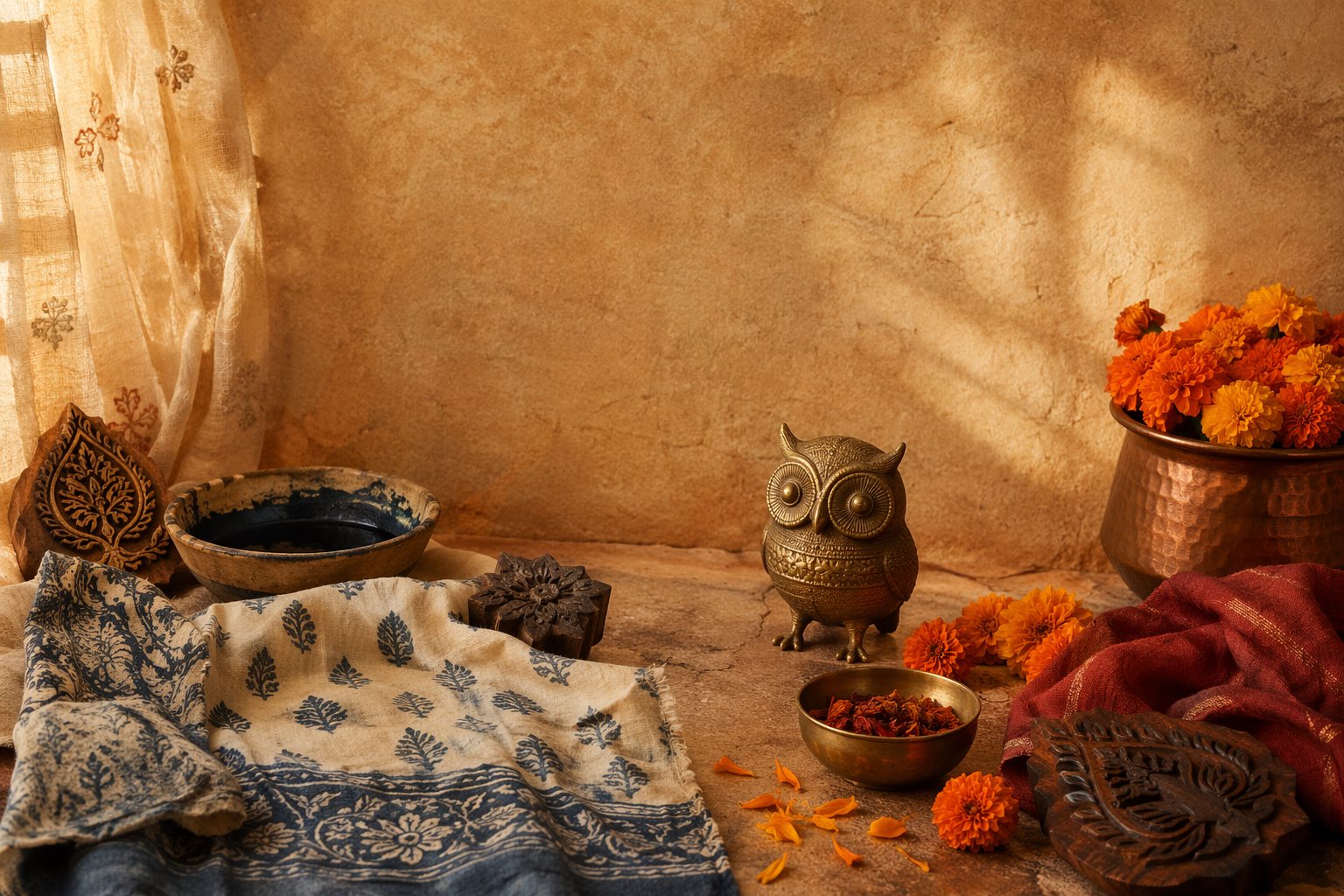
The Craft
Four thousand years of craft. Yours now.
The techniques behind the objects, where they come from, and the hands that keep them alive.
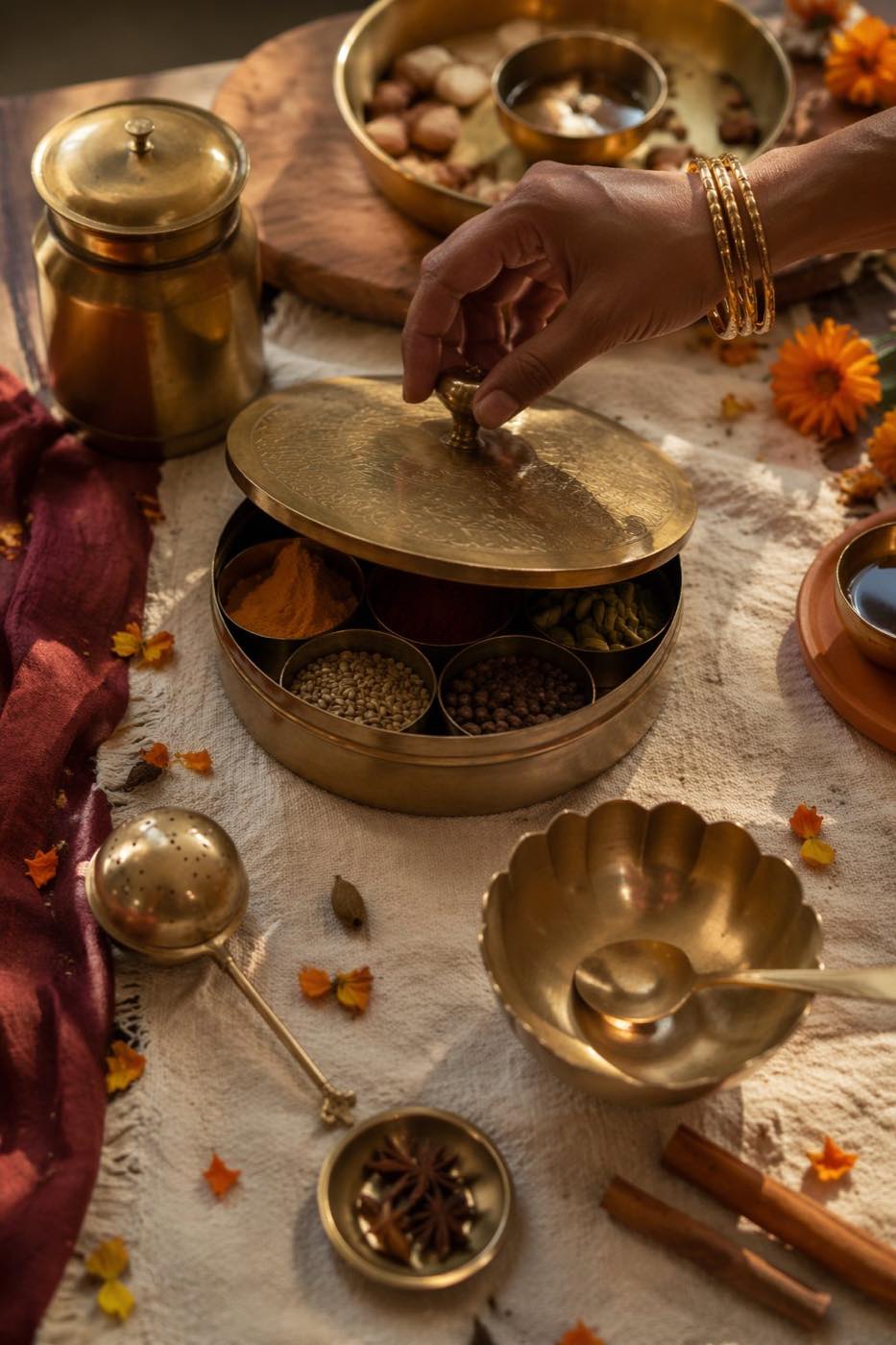
Brass · Moradabad
The Brass City.
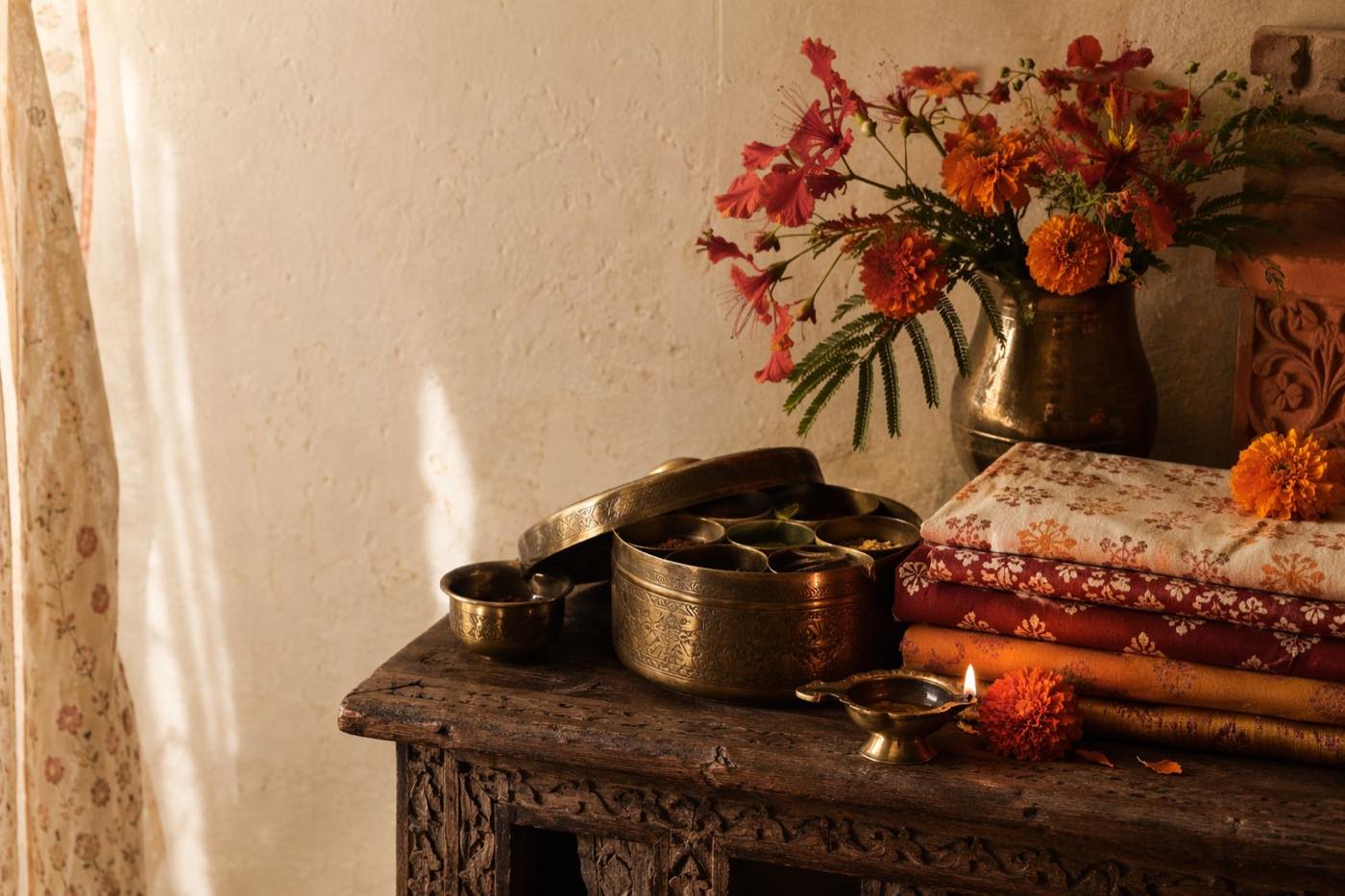
In Moradabad, India's Pital Nagari, families have worked brass for generations. Floral borders are hand-etched by artisans who learned the work from their fathers. Brass keeps its contents fresh in ways steel never will, and deepens with use. The patina is not a defect. It is the object becoming yours.
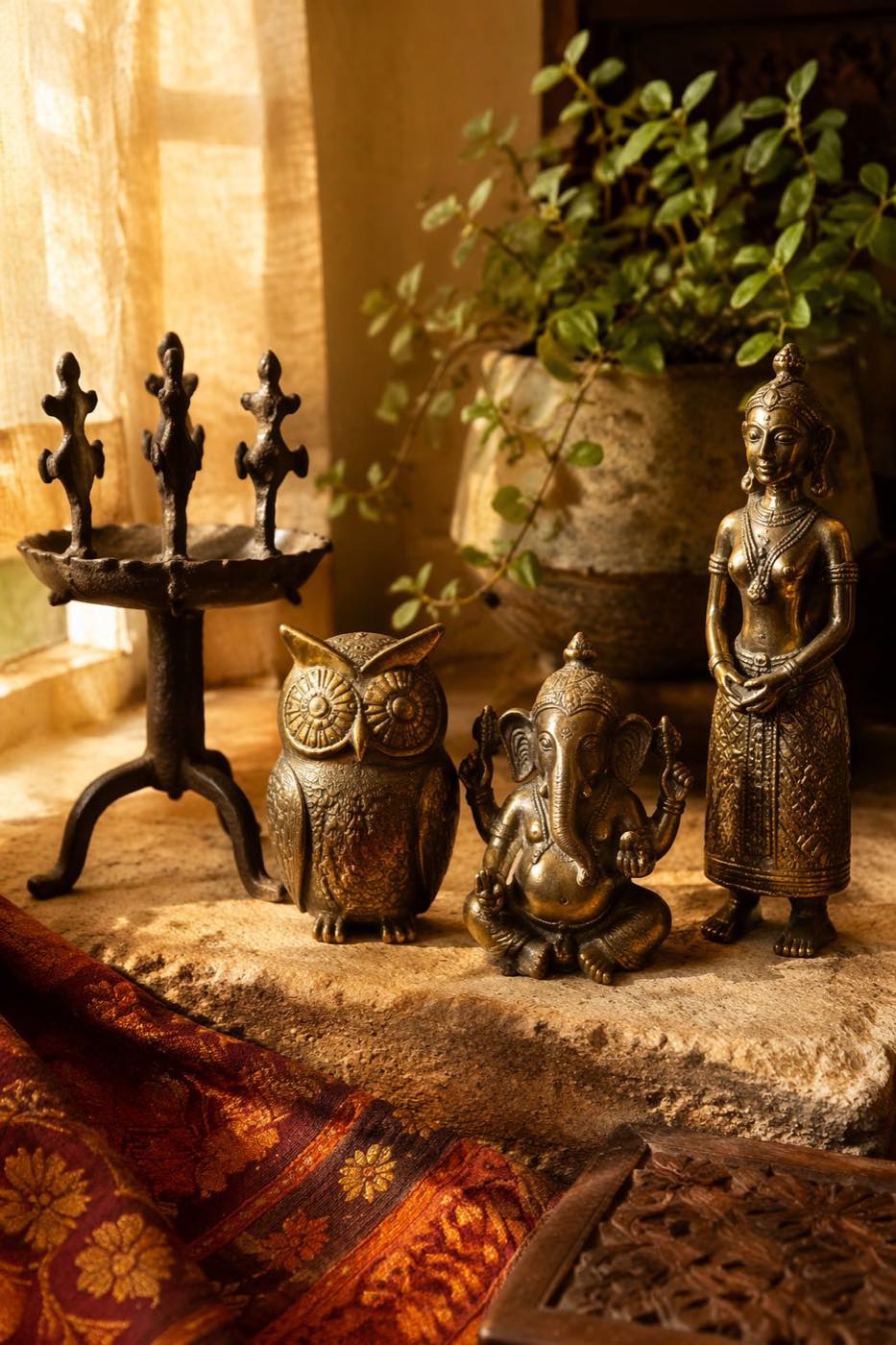
Dhokra · Bastar
The lost-wax method.
The Dhokra method of metal casting is over four thousand years old, practiced by the people of the Indus Valley, and still practiced by the same communities today, using the same lost-wax technique. Every piece is cast once and cannot be repeated. That is the point of wax casting: no two are ever the same.
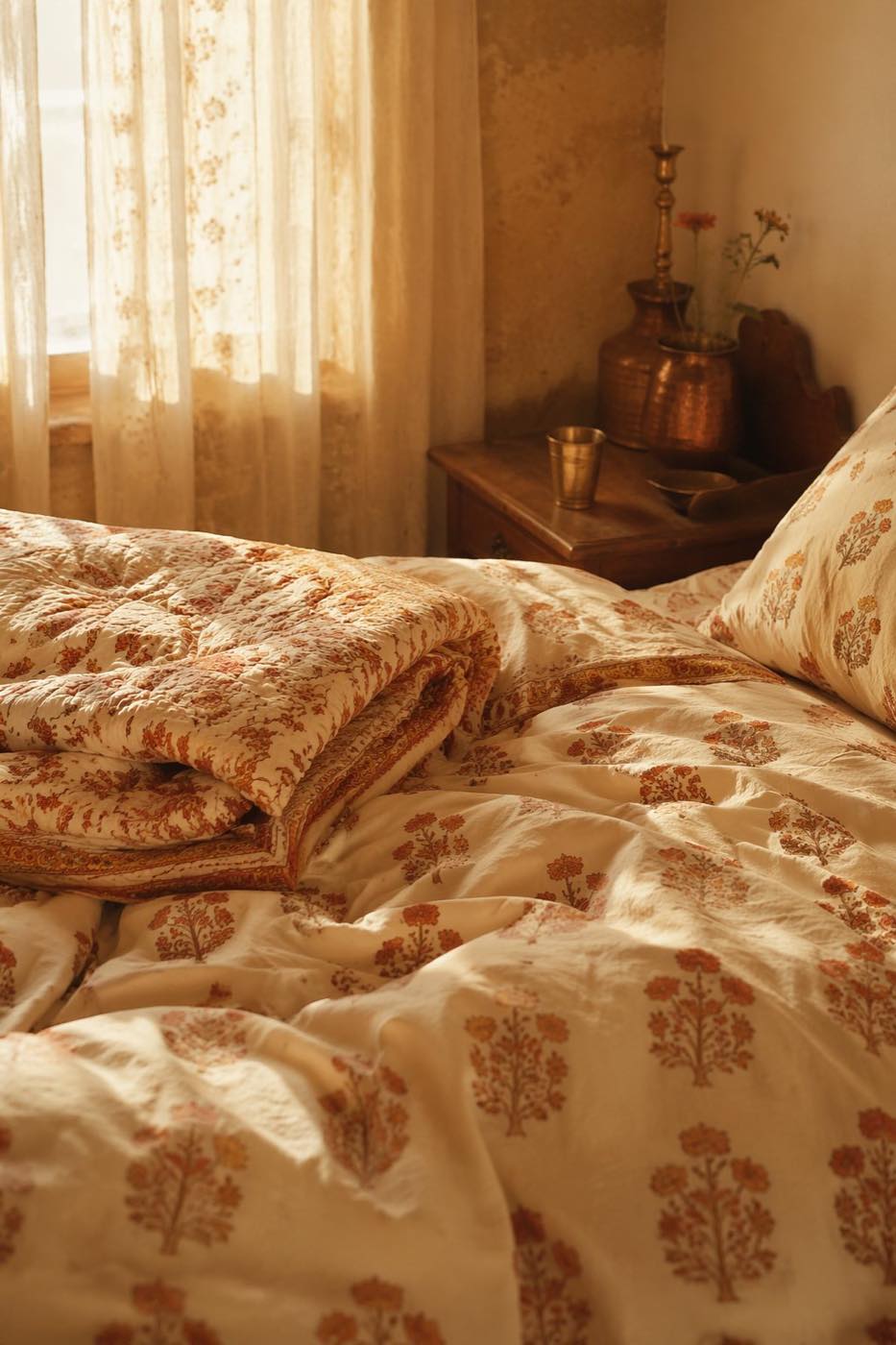
Block Print · Sanganer
Carved wood, natural dye.
Sanganer, outside Jaipur, has printed cloth for royal households for centuries. Each wooden block is carved by hand; every colour needs its own block, applied in sequence and registered by eye. No two impressions land the same. The colours come from a dye pot, not a Pantone swatch.
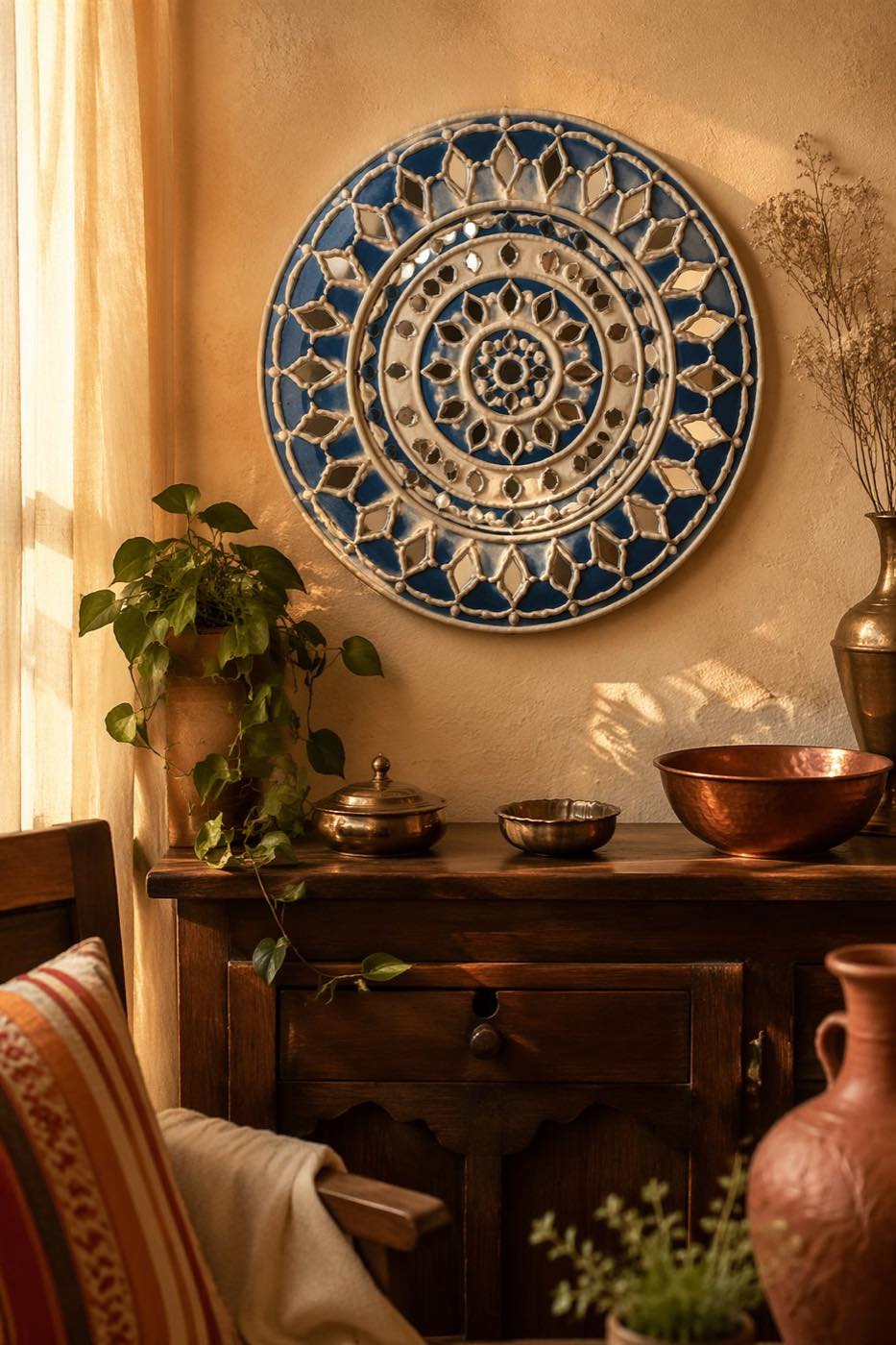
Lippan · Kutch
Mud and mirror.
In the white desert of Kutch, the communities of Gujarat have decorated their round mud houses, the bhungas, with Lippan work for centuries: the ancient technique of pressing mirror shards into clay. The mirrors catch light differently at every hour. Hang the work where the afternoon sun can reach it.
Begin
Bring a piece of it home.
Explore the collections, brass, block-print, Dhokra, Lippan, and wood.
Explore the Collections